How to calculate food cost percentage (with examples)
Add purchases to opening food inventory, subtract closing inventory, then divide by food sales and multiply by 100. Use this guide to cost a single dish or check food cost for the whole restaurant.

Restaurant operations
A food cost of 30% means you spent 30 out of every 100 in food sales on ingredients. Compare the same period each week or month to see whether menu prices, portion sizes or waste are hurting your margin.
The food cost formula
Count stock at the start and end of the same period, include food purchases within those dates, and use net food sales for that period. Keep drinks separate if you track beverage cost separately. For one dish use ingredient cost per serving ÷ net menu price × 100, including sides or garnishes served with it.
For example, if you start the month with PKR 100,000 of food, buy PKR 120,000 more and finish with PKR 70,000, you used PKR 150,000. On PKR 500,000 of net food sales, your food cost percentage is 30%.
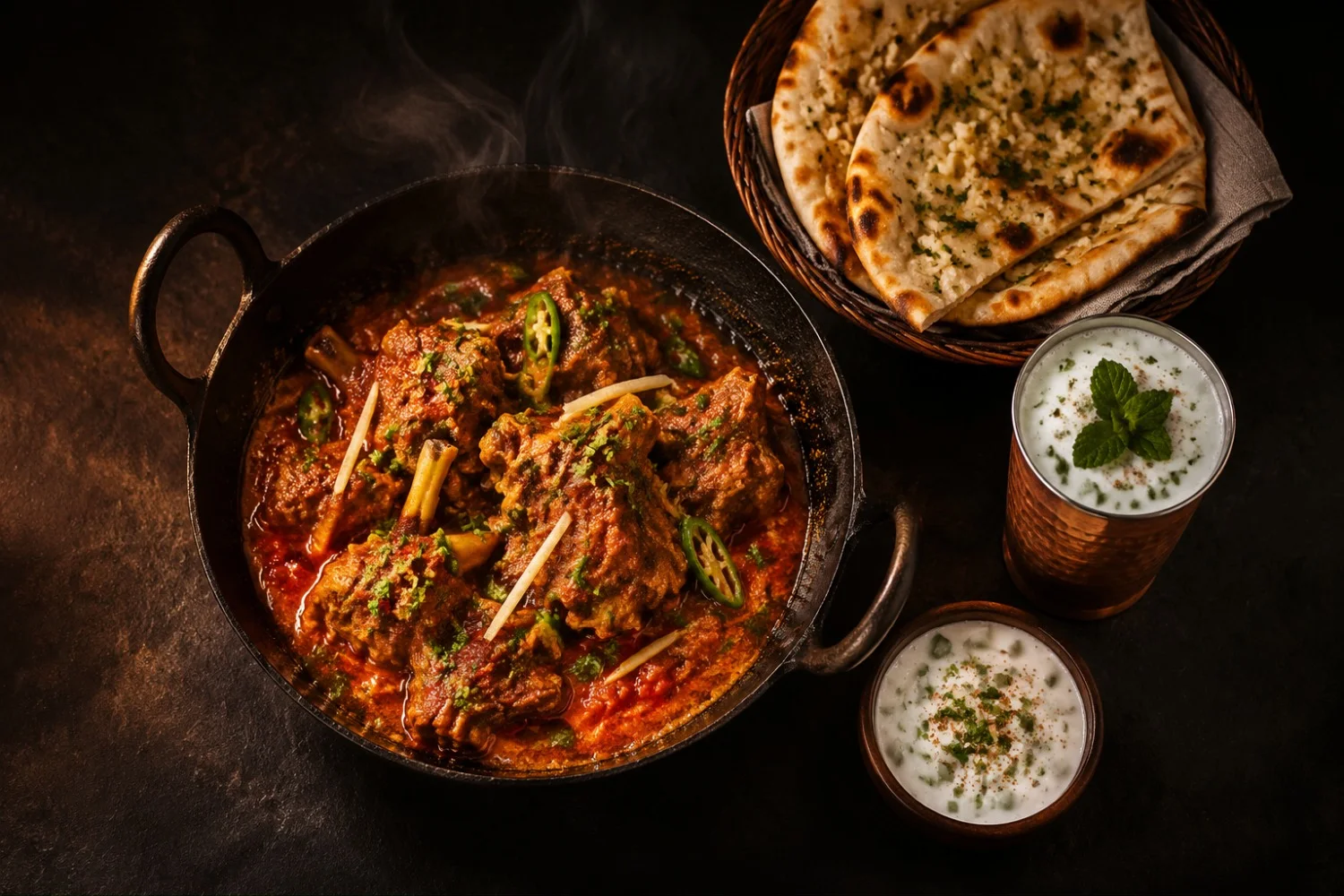
Worked example: mutton karahi
| Ingredient | Cost |
|---|---|
| Mutton, 1 kg | 2,200 |
| Tomatoes, ginger, chillies | 180 |
| Oil, ghee, spices | 140 |
| Total plate cost | 2,520 |
At a net menu price of PKR 6,500, this dish costs 2,520 ÷ 6,500 = 38.8% in ingredients. If your target is 35%, the same recipe would need a net menu price of PKR 7,200.
What is a good food cost percentage?
A range such as 25–35% is a starting point, not a target for every restaurant. Your menu mix, labour, rent and delivery costs determine what you can afford. Compare your actual food cost with your own budget and recipe costs before changing prices.
7 ways to lower your food cost
- Cost every recipe and re-check whenever supplier prices change.
- Record wastage daily instead of guessing at month end.
- Count stock regularly and investigate variance against recipes.
- Engineer the menu: promote high-margin dishes, rework low-margin ones.
- Standardise portions with scales and recipe cards.
- Order to days of cover, not gut feel.
- Review food cost daily, not monthly.
“If you only look at food cost once a month, you find out about a problem thirty days too late.”
Track it daily, not monthly
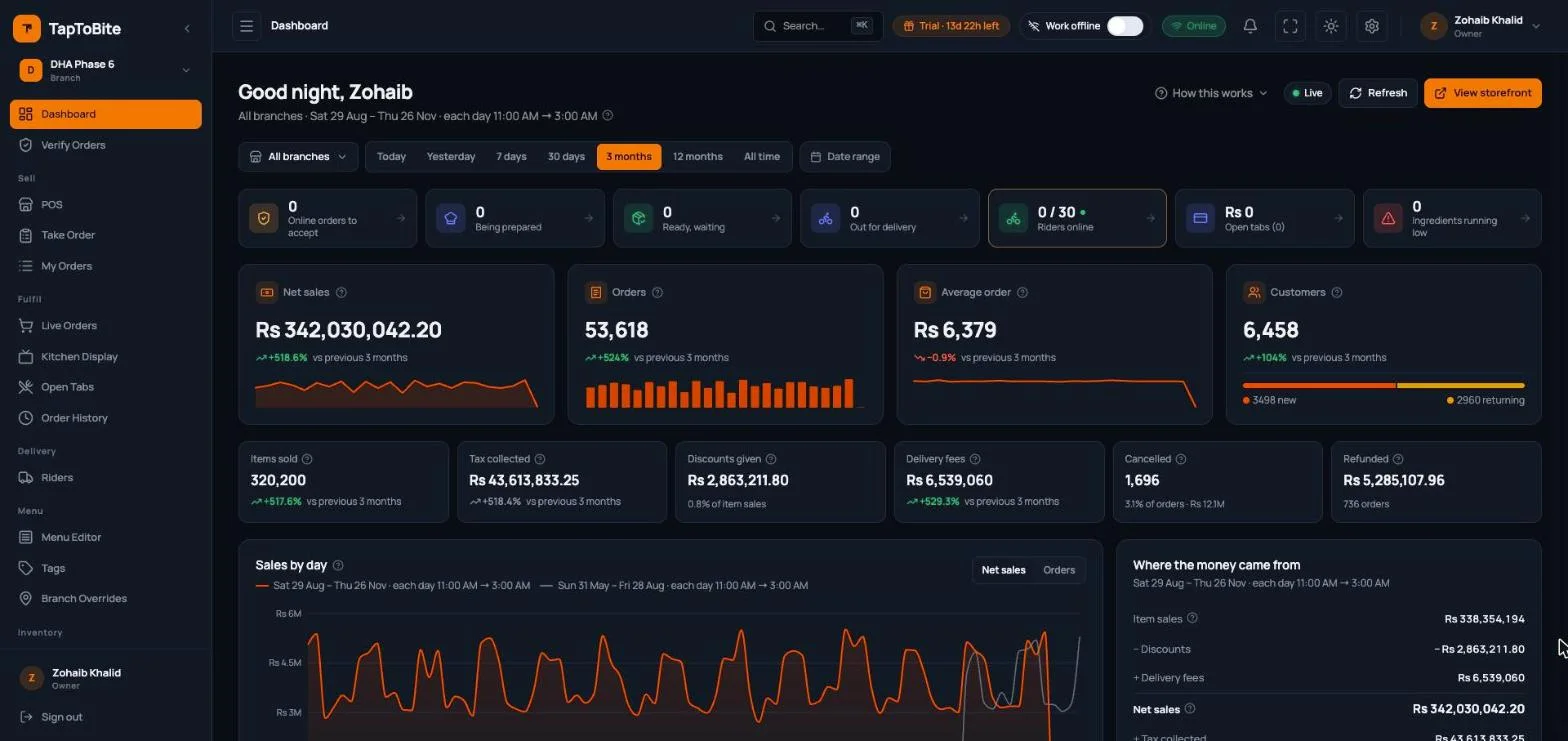
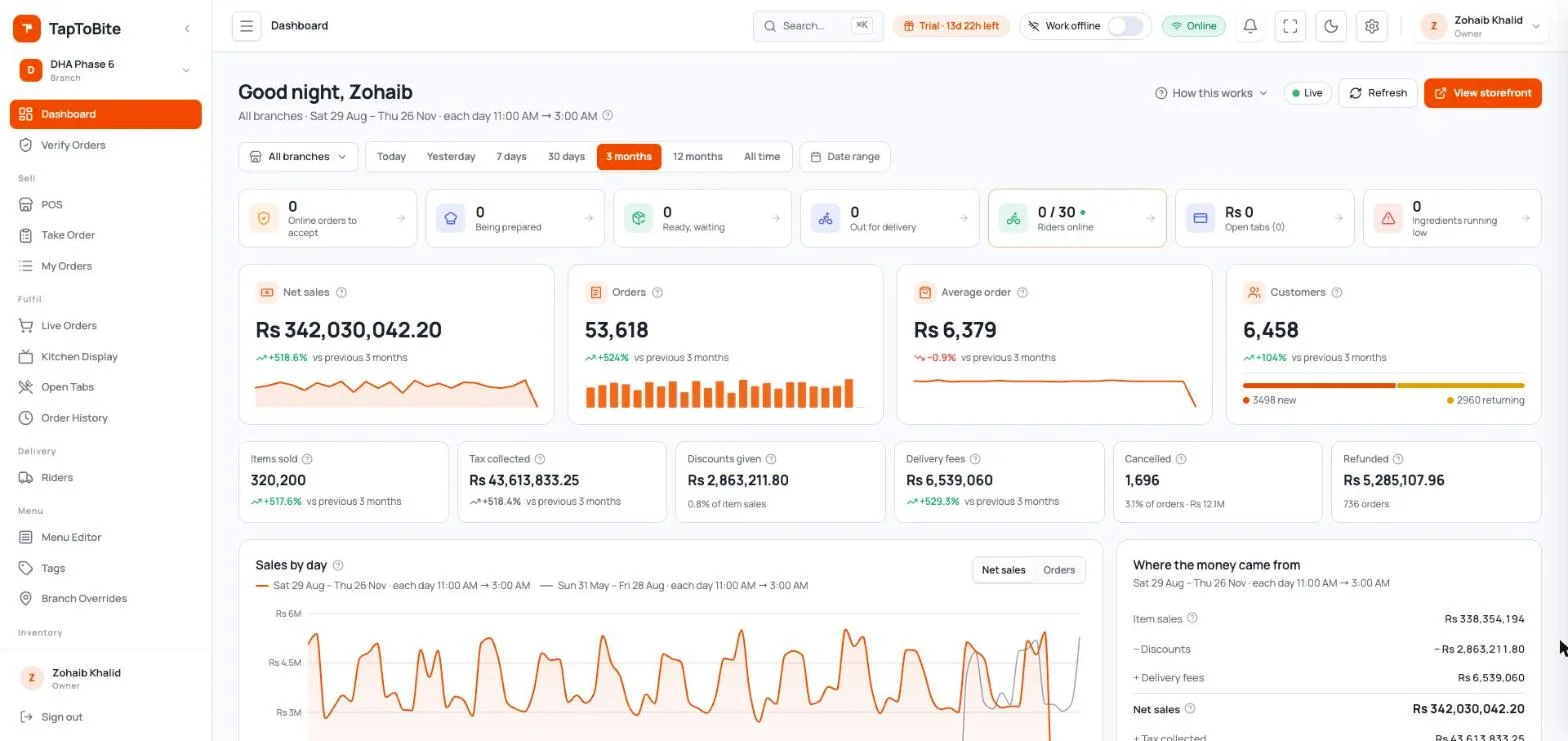
TapToBite's recipe-level inventory deducts ingredients as you sell, so food cost %, wastage and variance against recipes show up on your dashboard every day.
FAQ
How often should I calculate food cost?
Weekly at minimum; daily if your system calculates it from recipes.
Does food cost include drinks?
Track beverage cost separately — margins are very different.